Woody Cross: Word Connect
Athena.StudioWord
4.63.48K Reviews
- Version
- 2.24.0
- Installs
- 1.00M
- Age Rating
- Everyone
Screenshots
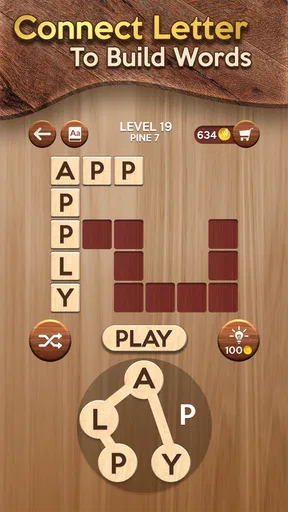
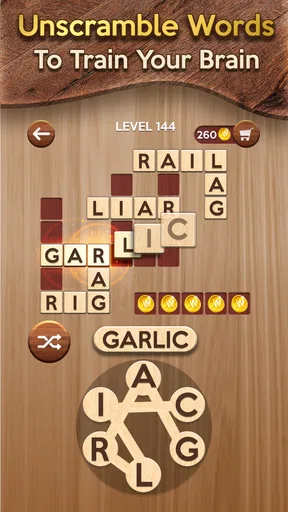

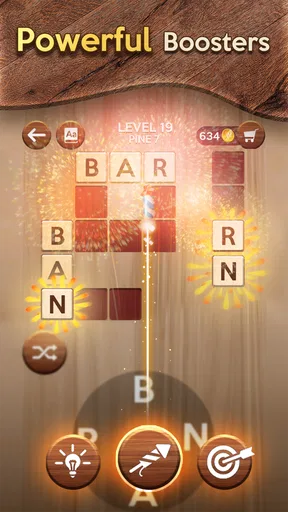
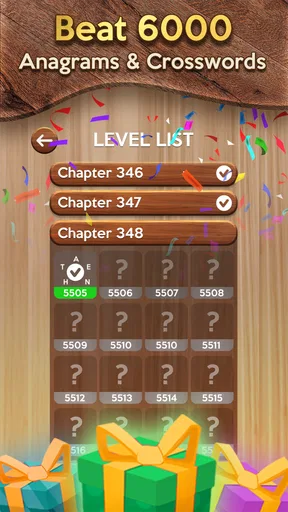
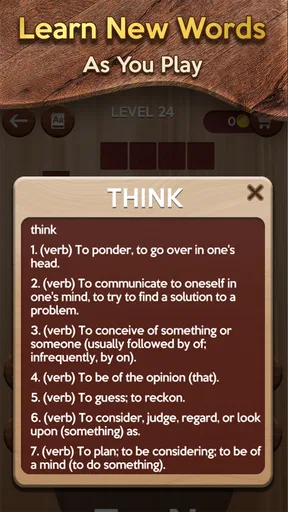
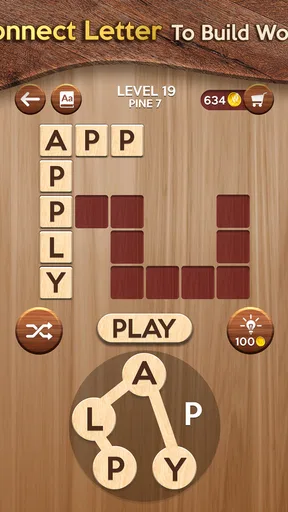
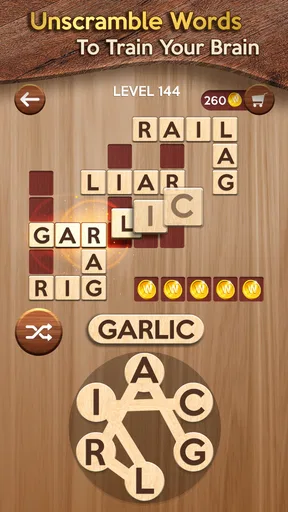
Our Review of Woody Cross: Word Connect
 Analysis by Appyee
I spent time with Woody Cross: Word Connect as a relaxed word game, and my first impression was that it understands the appeal of a short puzzle session. It is built around anagrams and crossword-style challenges, so the basic routine is easy to grasp: look at a group of letters, find words, and use them to complete a puzzle. That simplicity makes it approachable, but the real question is whether the format stays satisfying after the novelty fades. In my experience, it does best when I want a calm mental break rather than a competitive test of vocabulary.
Athena.Studio developed the game, which sits firmly in the word-puzzle category. It is free to start and carries an Everyone content rating, making it suitable for players who want something gentle and broadly accessible. The game first appeared on August 4, 2020, and its current version is 2.24.0. It supports devices running Android 7.0 or later, so it is not limited to recent phones. That combination of a low entry barrier and familiar puzzle rules is a large part of its appeal.
How the free word-puzzle experience works in everyday use
The most useful way to think about Woody Cross is as a pocket-sized vocabulary exercise with a crossword flavor. I can open it for a few minutes while waiting for an appointment, play through a longer stretch when I want to unwind, or return to it between more demanding tasks. It does not ask me to learn a complicated control scheme before I can enjoy it. The central challenge is recognizing possible words from the available letters and deciding which answer belongs in the puzzle.
That design creates a pleasant rhythm. An easy puzzle gives me immediate progress, while a more stubborn arrangement makes me slow down and examine the letters from another angle. I often find that the best move is not to stare at the board continuously. Instead, I mentally rearrange the letters, try shorter words first, and then return to the remaining spaces with a clearer view. This is a small but meaningful tip: treating each puzzle as a process of elimination works better than trying to guess the entire solution at once.
The crossword element also changes the experience compared with a plain anagram list. A word is not useful only because it can be formed; it needs to fit the structure of the puzzle. That gives each answer a little more purpose. When I find a word that unlocks a neighboring space or clarifies the remaining letters, the satisfaction feels more earned than simply completing a random vocabulary prompt.
Why the format is easy to pick up
The rules are familiar enough that I do not need a tutorial-heavy introduction. Someone who already plays crossword puzzles, word searches, or anagram games will understand the general idea quickly. Someone less experienced can also start without feeling punished for not knowing a specialized system. This is particularly helpful for casual players who want a game that can be enjoyed in short bursts rather than mastered through repeated instruction.
I also like that the basic activity encourages a slower pace. There is no need to rush every answer. When I am tired, I can approach a puzzle as a quiet concentration exercise; when I am more alert, I can actively search for patterns and less obvious combinations. That flexibility makes the game suitable for different moods, although players looking for intense pressure or fast competition may find it too gentle.
One practical workflow improved my sessions: I separate “possible” words from “likely” words. First, I look for common short answers that seem to fit. Then I use the letters left over to test longer or less obvious possibilities. This prevents me from wasting too much time repeatedly trying the same arrangement. It is a simple habit, but it makes the game feel more strategic and less like blind guessing.
What the free price means for a new player
The important cost detail is straightforward: the game is free to download and play, while in-app purchases range from $0.99 to $59.99 per item. That means I can evaluate the core experience without paying upfront. For a player who is unsure whether this style of puzzle is enjoyable, free access is a genuine advantage because the decision does not require committing to a paid download.
At the same time, “free” should not be confused with unlimited paid value. The purchase range covers small optional transactions through a much larger one, so anyone who spends should decide in advance what the game is worth to them. I would not treat the highest-priced item as automatically good value simply because it exists. The sensible approach is to enjoy the free portion first, identify whether the puzzles are becoming part of your routine, and only then consider a purchase that solves a specific annoyance or supports continued play.
For me, the free entry point is the strongest financial reason to try it. I can use it as a waiting-room game, a bedtime distraction, or a quick vocabulary break without making it part of my regular entertainment budget. If I eventually feel that progress depends too much on spending, that would change my opinion. A free game earns trust when optional purchases remain optional in practice, not merely in wording.
Where the value comes from
The value is less about a large collection of dramatic features and more about repeatable, low-effort engagement. I get a compact activity that exercises attention, word recognition, and flexible thinking. It is not a replacement for a serious crossword publication or a structured language course, but it can fill the gap between those experiences and completely passive screen time.
Another strength is the way the game accommodates uneven attention. I can solve one puzzle carefully, pause, and return later without needing to remember a complicated story or a long sequence of objectives. That makes it useful for people who prefer modular play. It also suits households where different players may pick up the same device at different times, since the central appeal comes from solving rather than following a narrative.
The game has attracted more than a million installs, with an average rating of 4.6 from around 16 thousand ratings and roughly 3.5 thousand written reviews. Those figures suggest that many players find the basic formula appealing, but they do not tell me whether it will suit a particular vocabulary level or tolerance for repetition. I would use the positive reception as a reason to try the free version, not as proof that every player will find the long-term experience equally rewarding.
The tradeoffs I noticed while playing
The same simplicity that makes Woody Cross approachable can also limit it. If I want a word game with deep strategy, a strong competitive ladder, a rich story, or a highly distinctive visual identity, this is probably not where I would look first. Its appeal depends on enjoying the act of solving anagrams and filling crossword-like arrangements. Players who tire quickly of repeated word formation may feel that the format becomes familiar sooner than they would like.
Vocabulary difficulty is another personal factor. A player with a broad English vocabulary may move through some puzzles comfortably, while another player may need more patience with unusual combinations. That is not necessarily a flaw, but it affects the game’s mood. I enjoy the occasional challenge, yet a run of answers that feels obscure can turn a relaxing session into a guessing exercise. I would recommend approaching it with the expectation that not every answer will arrive immediately.
The purchase structure also deserves caution. Since individual in-app purchases can reach $59.99, I would keep spending controlled rather than buying impulsively during a difficult puzzle session. The free starting point makes the game easy to sample, but the presence of optional purchases means families should still pay attention to how the device handles transactions. The most responsible way to use it is to decide on a personal limit before spending, especially if the game is being played by a child.
There is also a difference between a game that helps me pass time and one that becomes a lasting hobby. Woody Cross succeeds strongly at the first job. Whether it succeeds at the second depends on how much I enjoy its particular word-and-crossword loop. I would not choose it solely because I want endless novelty. I would choose it because I like returning to a familiar puzzle format and gradually improving my ability to spot answers.
Small techniques that make puzzles less frustrating
When I get stuck, I avoid focusing only on the longest visible answer. Short words are often useful because they reduce the number of possible letters and reveal how the remaining spaces relate to one another. I also scan for common endings and beginnings rather than reading the letters in their original order. This turns the board into a set of patterns instead of a single intimidating jumble.
A second useful habit is to stop after a few unsuccessful attempts. Continuing to tap through the same guesses rarely improves my thinking. I put the puzzle down briefly, look away, and return with a fresh arrangement in mind. Word games benefit from this reset because a word that seemed invisible can become obvious once I am no longer forcing it.
Finally, I treat completion as more important than speed. If I rush, I tend to repeat familiar words and overlook the less obvious answer that the puzzle is asking for. If I slow down and use the crossword structure as a guide, I make fewer random guesses. This is where the game offers more than a basic anagram shuffle: the layout gives me clues about what kind of answer is still needed.
Who will get the most from it
I would recommend it to casual word-game players, crossword fans who want a lighter alternative, and anyone who enjoys short concentration sessions. It is also a reasonable choice for people who want a free game that can be tested without a purchase. The Everyone rating makes it broadly approachable, although the actual enjoyment will still depend on the player’s vocabulary and patience.
It works especially well in everyday situations where I have ten spare minutes but do not want to begin something demanding. On a commute, I can solve a small number of puzzles and stop without feeling that I have abandoned a larger mission. During a break from work or study, it gives my attention a different kind of task. Before bed, it can be calmer than a fast action game, provided word solving does not make me more mentally alert.
I would be more selective about recommending it to players who need a strong sense of progression, social competition, or a story-driven reason to continue. Those players may prefer a dedicated crossword app, a multiplayer word game, or a more complex puzzle title. I would also suggest skipping it if you dislike anagram mechanics themselves; no amount of polish can change the fact that forming words is the central activity.
How it compares with familiar alternatives
Compared with a traditional crossword, Woody Cross feels more guided and less dependent on interpreting a written clue. That makes it easier to enter, but it may feel less intellectually layered to experienced crossword solvers. A newspaper-style crossword can offer richer clues, cultural references, and a stronger sense of authorship, while this game is better suited to quick, repeatable sessions.
Compared with a plain word search, the anagram approach asks me to actively construct answers rather than simply locate them in a grid. That usually feels more engaging when I want to think, although it can also be more demanding when I am tired. Compared with competitive word games, it offers a quieter experience and less pressure. The tradeoff is that I do not get the same urgency or social tension that makes head-to-head play exciting.
Those comparisons help clarify its place. I see it as a middle option: more involved than passive scrolling, less demanding than a serious crossword, and calmer than a competitive word battle. That is a useful niche, but only if it matches what I want at the moment. I would not replace every other word game with it, yet I can see why it remains appealing as an accessible daily puzzle choice.
My final recommendation
After using it, I think Woody Cross is worth trying because the entry cost is free and the central puzzle loop is immediately understandable. Athena.Studio has chosen a format that works well for short sessions, casual concentration, and players who like discovering words through a crossword-style structure. Its broad audience, Everyone rating, and support for Android 7.0 or later make it easy for many people to test on an existing device.
My recommendation comes with a clear boundary: I would start without spending and judge the game by how often I return to it naturally. If the puzzles become a satisfying part of your routine, a small optional purchase may feel reasonable, but I would not assume that a larger purchase automatically improves the experience. The free version is the right place to decide whether the format has enough variety and challenge for you.
My verdict is to download it if you want a calm, accessible word game for spare moments, but skip it if you are seeking deep strategy, competitive play, or a constantly changing experience. For the right player, it delivers useful mental engagement without demanding much time. For everyone else, the familiar anagram formula may feel too narrow. I would recommend it to a friend who enjoys crossword-like puzzles and wants a free way to explore that style, while being honest that its long-term value depends more on personal love of word solving than on any single extra feature.
Verdict
Strengths of Woody Cross: Word Connect
- Simple rules make it easy to start playing immediately.
- Short levels are convenient for quick breaks or casual sessions.
- Wood-themed visuals create a calm, uncluttered atmosphere.
- Hints can help when a level becomes difficult.
- Works well for players who enjoy vocabulary-based challenges.
Limitations of Woody Cross: Word Connect
- Some puzzles may feel repetitive after extended play.
- Difficulty can vary noticeably between consecutive levels.
- Hints may be limited unless earned or obtained through rewards.
- Small word lists can make certain answers feel predictable.
- Progress may depend on watching ads or waiting for bonuses.
Other Releases by Athena.Studio
View All
Woody 99 - Sudoku Block Puzzle
Board4.7
Similar Picks in This Category
View All
Word Search - Word Puzzle Game
Bluetile4.8

Word Search Quest - Puzzles
Blackout Lab4.8

CodyCross: Crossword Puzzles
Fanatee, Inc.4.7

Words of Wonders: Crossword
Fugo Games4.9

Wordscapes: Word puzzle game
PeopleFun4.7

Word Search Explorer
PlaySimple Games4.9
Frequently Asked Questions
What is Woody Cross: Word Connect?
Woody Cross: Word Connect is a relaxing word puzzle game built around crossword-style challenges. Players connect letters, discover hidden words, and complete themed boards by swiping or tapping across the available letter combinations. The game combines casual vocabulary practice with a wooden visual style, making it suitable for short sessions as well as longer play periods when you want a calm, offline-friendly brain game.
How do you play Woody Cross: Word Connect?
Each puzzle presents a group of letters and a crossword-like layout with empty spaces. Your objective is to find the correct words by connecting letters in the right order, usually by swiping across them. Some answers are obvious, while others require experimenting with different combinations or using hints. As you complete words, the remaining spaces gradually reveal the full puzzle and unlock additional levels.
Is Woody Cross: Word Connect free to download and play?
Woody Cross: Word Connect can generally be downloaded and played without an upfront purchase, although the exact availability may depend on your Android or iOS region. Like many free puzzle games, it may include advertisements, optional purchases, or paid resources such as extra hints. Before downloading, check the store listing for current pricing, in-app purchase details, and any changes introduced by recent updates.
Can Woody Cross: Word Connect be played offline?
Many of the core word puzzles in Woody Cross: Word Connect may be playable without a continuous internet connection, which is convenient for travel or areas with limited service. However, features such as advertisements, cloud synchronization, purchases, competitions, or updated content may require internet access. It is best to launch the game online at least once after installation and verify which functions remain available offline on your device.
Is Woody Cross: Word Connect suitable for children and beginners?
Woody Cross: Word Connect is approachable for beginners because its controls are simple and the early puzzles usually introduce the word-connecting mechanic gradually. It can also encourage spelling, vocabulary recognition, and concentration. Difficulty increases over time, so younger players may occasionally need help with unfamiliar words. Parents should still review the game’s advertising, optional purchases, privacy information, and age rating before allowing regular use.
Play our best games!


